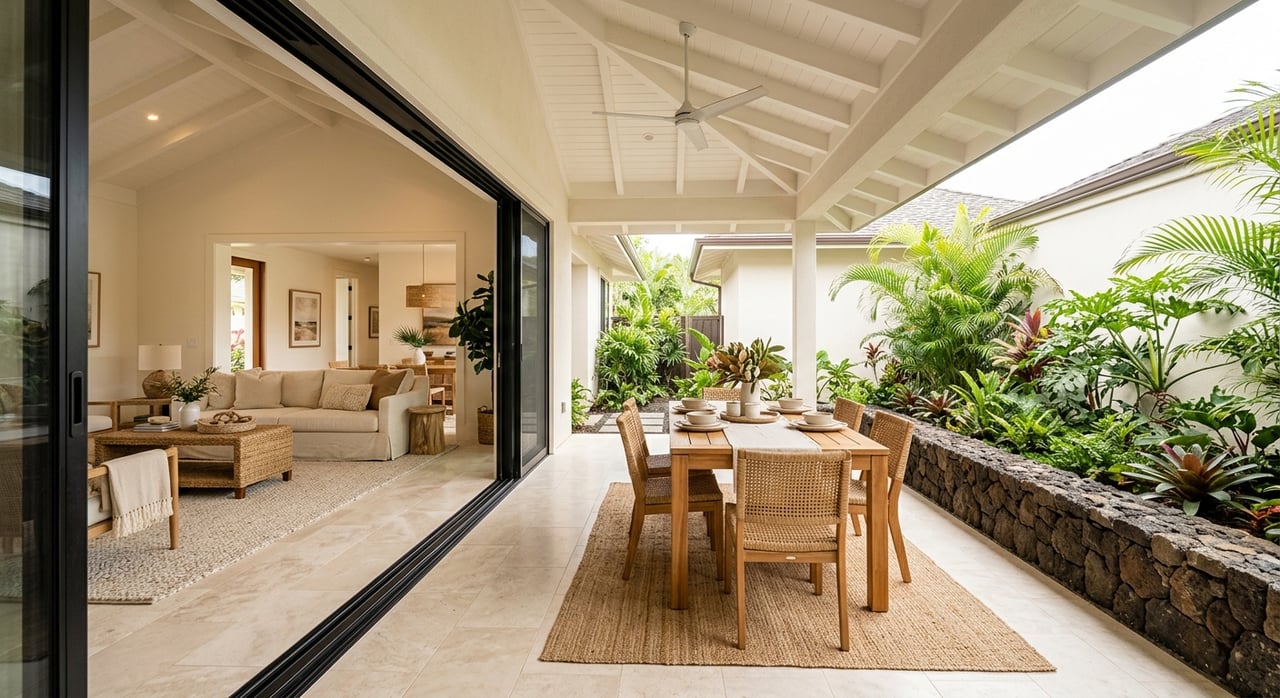
What Owning a Wailea Second Home Really Involves
May 28, 2026
May 28, 2026
Dreaming about a place in Wailea that feels like your own private reset button? For many second-home owners, that is exactly the appeal: a home base in South Maui where beach mornings, golf afternoons, and sunset dinners can become part of your normal routine when you are on island. If you are thinking about buying here, it helps to understand both the lifestyle and the real carrying costs so you can make a smart decision with clear expectations. Let’s dive in.
Wailea is built around resort living in a way that shapes everyday ownership. According to the Wailea Resort Association, the area includes five crescent-shaped beaches, three beach access parks, a 1.5-mile coastal walking trail, three championship golf courses, more than 50 restaurants and lounges, 1,985 vacation-rental condos and villas, and 497 resort homes.
That mix creates a very specific rhythm for second-home ownership. When you stay in Wailea, your days often revolve around nearby beaches, golf, dining, spa time, and short scenic drives rather than a more spread-out, errand-heavy routine. It is one reason the area appeals to buyers who want a true resort environment instead of a typical suburban pattern.
Wailea is also relatively convenient for arrivals and departures. The resort association places it about 17 miles from Kahului Airport, which matters if you plan to use your home for shorter visits throughout the year.
Many owners spend a lot of their time within the resort core. The Wailea Resort Association points to The Shops at Wailea, Wailea Town Center, Gateway Center, Wailea Village, and hotel shops as part of the area’s day-to-day convenience.
That means your second home experience can feel compact and easy to manage while you are in residence. You may not need to venture far for dining, light shopping, or a relaxed afternoon out.
Several of Wailea’s best-known beaches are county facilities with free admission. Maui County notes that Wailea Beach, Ulua/Mokapu, Polo, and Keawakapu offer public access, with features such as parking, restrooms, and showers.
There are also practical details to know. County information notes no lifeguard on duty at these locations, and Keawakapu is described as a heavily visited access point with constrained parking. In other words, the beach lifestyle is a major benefit, but some access points require a little planning, especially during busy periods.
For many owners, golf is not an occasional add-on. It is part of the reason to buy in Wailea. Wailea Golf Club operates the Gold, Emerald, and Blue courses, making golf one of the area’s signature amenities.
At the same time, it is worth viewing golf as a meaningful ongoing lifestyle expense. For 2026, guest green fees are listed at $325 for Gold and Emerald and $265 for Blue, with a mandatory shared power cart included.
One of the interesting things about owning in Wailea is that it can feel like both a resort and a residential community. The resort side is obvious in the beaches, golf, hotels, dining, and shopping.
The neighborhood side shows up in the systems that keep the area functioning. The Wailea Community Association says common areas include more than 30 acres, plus parks, beach accesses, and more than 10 miles of landscaped roadsides. That maintenance work is part of what gives Wailea its polished, consistent environment.
Second-home buyers are often prepared for the purchase price. What sometimes surprises them is how much the ownership experience is shaped by taxes, association dues, and upkeep.
Maui County’s FY 2025-26 real property tax rates show a wide difference between owner-occupied homes and classifications more commonly tied to second-home use. Non-owner-occupied residential property is taxed at $5.87, $8.60, or $17.00 per $1,000 of taxable value depending on the tier.
The county also lists TVR-STRH rates at $12.50, $14.00, or $15.55 per $1,000 depending on the tier. Just as important, Maui County says some second homes in zones that allow transient occupancy may be classified as short-term rental based on highest and best use, even if they are not actually rented short term.
That makes classification a key part of your purchase analysis. Two properties with similar asking prices can carry very different tax burdens depending on how the county classifies them.
Association dues are another major factor in Wailea ownership. The dues help support the kind of shared infrastructure that keeps resort communities operating, and Hawaiʻi condominium law states that owners cannot avoid common-expense liability by not using the common elements or by abandoning the unit.
The law also requires boards to provide 30 days written notice before maintenance-fee increases. For a part-time owner, this means dues are not optional background costs. They are part of the financial structure of owning in a maintained resort setting.
Actual dues can vary a lot by property. Current listing examples cited in the research showed one Palms at Wailea unit with a $1,675 monthly HOA fee, while a Wailea Palms listing showed $294 semi-annually. That wide spread is a reminder that you need to evaluate each building on its own terms.
A common question is whether you can offset costs by renting the property when you are away. The short answer is: sometimes, but it depends on the specific community rules, zoning, and tax treatment.
Maui County notes that whether a property can be rented depends in part on county rules and the property’s permitted use. The research also shows that listings in the same broader area may be marketed very differently, including some intended for long-term residential use and others positioned as vacation-rental condos.
If you do rent your property, Hawaiʻi treats rental activity as a taxable business. The state says long-term rentals are subject to Hawaiʻi income tax and general excise tax, while short-term rentals of fewer than 180 consecutive days are subject to general excise tax and transient accommodations tax.
The state also makes clear that using a third-party property manager does not remove the owner’s tax obligations. If rental income is part of your plan, the setup details matter from day one.
Owning in Wailea means living close to the ocean, and that beauty comes with practical realities. Maui County says the Kihei coast is partly protected from large north Pacific swell, but winter and summer swell can still change the beach profile dramatically.
The county’s erosion mapping specifically tracks North Wailea, South Wailea, and Big Beach/Makena. That does not mean every property faces the same level of exposure, but it does mean coastal conditions are part of the ownership picture.
Parking and access can also affect your day-to-day experience. Maui County identifies Keawakapu as a heavily visited access point with constrained parking and includes a proposed new lot in its capital plan to help reduce roadside congestion.
Wailea ownership also tends to mean buying into a market where inventory can be limited and sales volume can be relatively low. In the March 2026 REALTORS Association of Maui report, Wailea/Makena had a median sold price of $2.78 million for single-family homes and $1.90 million for condos.
That same month, there were only 5 single-family sales and 9 condo sales recorded in Wailea/Makena. For you as a buyer, that can mean fewer chances to find the right fit and a stronger need to understand each property’s tax classification, dues, and use options before making an offer.
The best way to view a second home in Wailea is as a lifestyle asset with a detailed operating sheet attached to it. The lifestyle side is easy to see: beaches, golf, dining, walkable resort conveniences, and a setting designed for time away from your primary home.
The operating side matters just as much. Property taxes, HOA dues, upkeep, permitted use, and rental tax obligations can all shape whether a home feels simple and rewarding or unexpectedly expensive.
If you are buying with clear goals, Wailea can offer a highly appealing second-home experience. The key is matching the property to the way you actually plan to use it.
If you want help comparing Wailea condos, villas, or resort homes with an eye on lifestyle, taxes, dues, and rental considerations, connect with Cory Mckim for locally grounded guidance tailored to your goals.
Stay up to date on the latest real estate trends.
We pride ourselves in providing personalized solutions that bring our clients closer to their dream properties and enhance their long-term wealth.